 Mobile Computing Today News from the Mobile World

Wearable display technology is changing the way people interact with digital information. From smartwatches and fitness bands to advanced augmented reality (AR) glasses and head-mounted displays, wearable displays provide users with real-time access to information while keeping their hands free and enhancing convenience.
The growing adoption of smart devices, increasing health awareness, and rapid advancements in display technologies such as OLED and MicroLED are driving the popularity of wearable displays across the globe. These devices are becoming an essential part of everyday life by offering seamless connectivity, health monitoring, navigation assistance, communication, and entertainment.
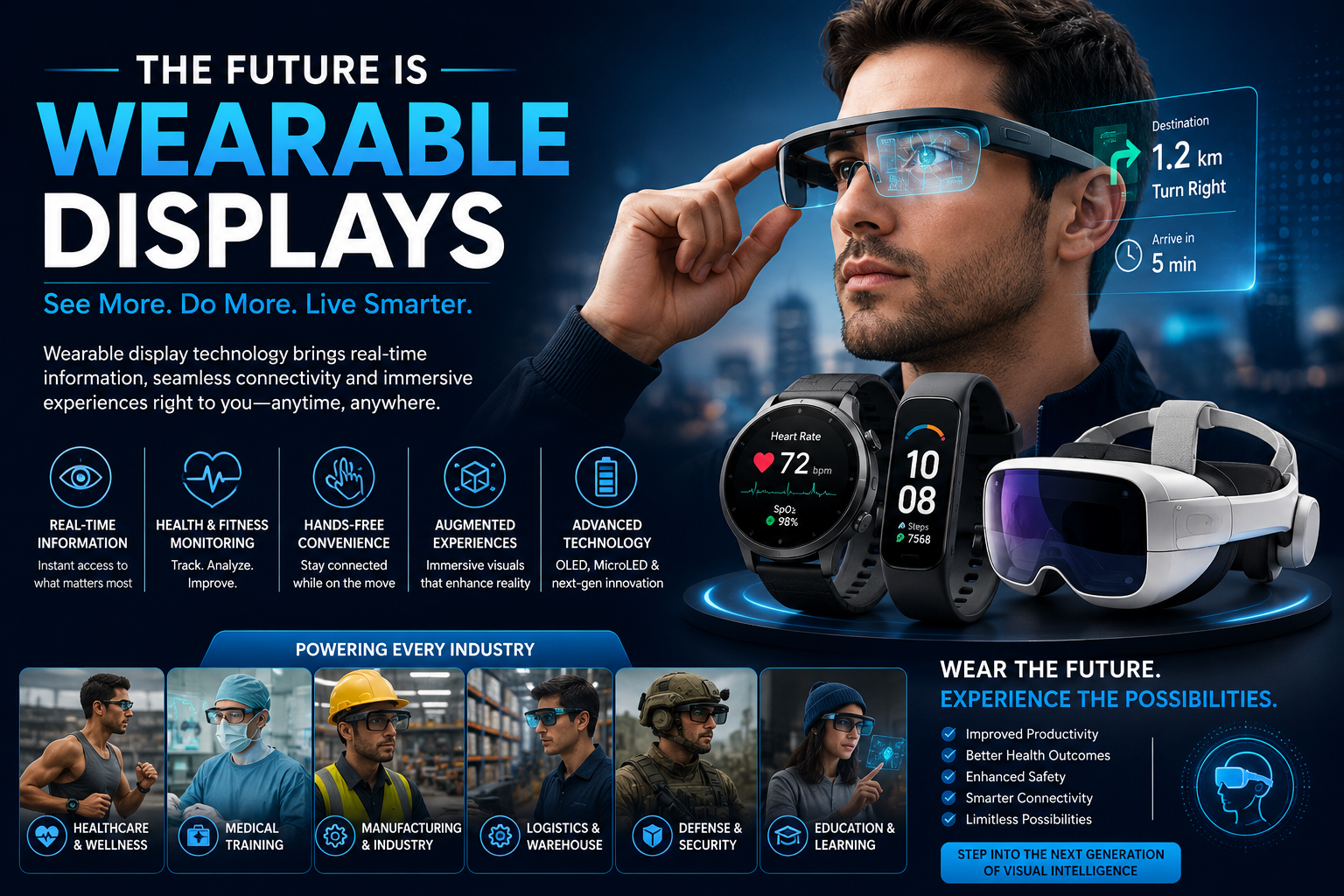
One of the key advantages of wearable displays is their ability to provide instant access to critical information. Smartwatches enable users to receive notifications, track fitness activities, monitor heart rate, and manage daily tasks directly from their wrist. Meanwhile, AR-enabled head-mounted displays are revolutionizing industries such as healthcare, manufacturing, logistics, defense, and education by delivering hands-free visual guidance and real-time data visualization.
Display technology innovations continue to enhance the user experience. OLED displays offer vibrant colors, deep contrast, and energy efficiency, making them ideal for premium wearable devices. MicroLED technology is emerging as a next-generation solution, delivering superior brightness, durability, and battery performance. These advancements are helping manufacturers develop lighter, more comfortable, and more powerful wearable products.
The healthcare sector is becoming a major adopter of wearable display technology. Smart wearable devices help users monitor vital signs, track physical activity, improve wellness, and support preventive healthcare. Healthcare professionals are also utilizing wearable displays for patient monitoring, remote consultations, and medical training applications.
Enterprise applications are creating new growth opportunities for wearable displays. Organizations are increasingly deploying smart glasses and AR headsets to improve workforce productivity, enhance operational efficiency, reduce errors, and provide remote technical assistance. These solutions enable workers to access instructions, manuals, and real-time support without interrupting their tasks.
As consumer demand for connected devices continues to rise, wearable displays are expected to become even more sophisticated. Future developments will focus on improved battery life, enhanced display quality, lightweight designs, artificial intelligence integration, and advanced augmented reality capabilities.
Wearable displays are no longer just technology accessories – they are becoming intelligent companions that enhance productivity, health, communication, and everyday experiences. As innovation continues to accelerate, wearable display technology is poised to play a significant role in shaping the future of digital interaction and connected lifestyles.