 Mobile Computing Today News from the Mobile World

As the world accelerates its transition toward renewable energy, solar power has emerged as one of the most widely adopted clean energy sources. However, solar energy generation depends on sunlight availability, making energy storage a critical component for ensuring a stable and continuous power supply. Solar energy storage systems are transforming how homes, businesses, industries, and utilities utilize renewable energy by storing excess electricity generated during the day for use during nighttime, cloudy weather, or peak demand periods.
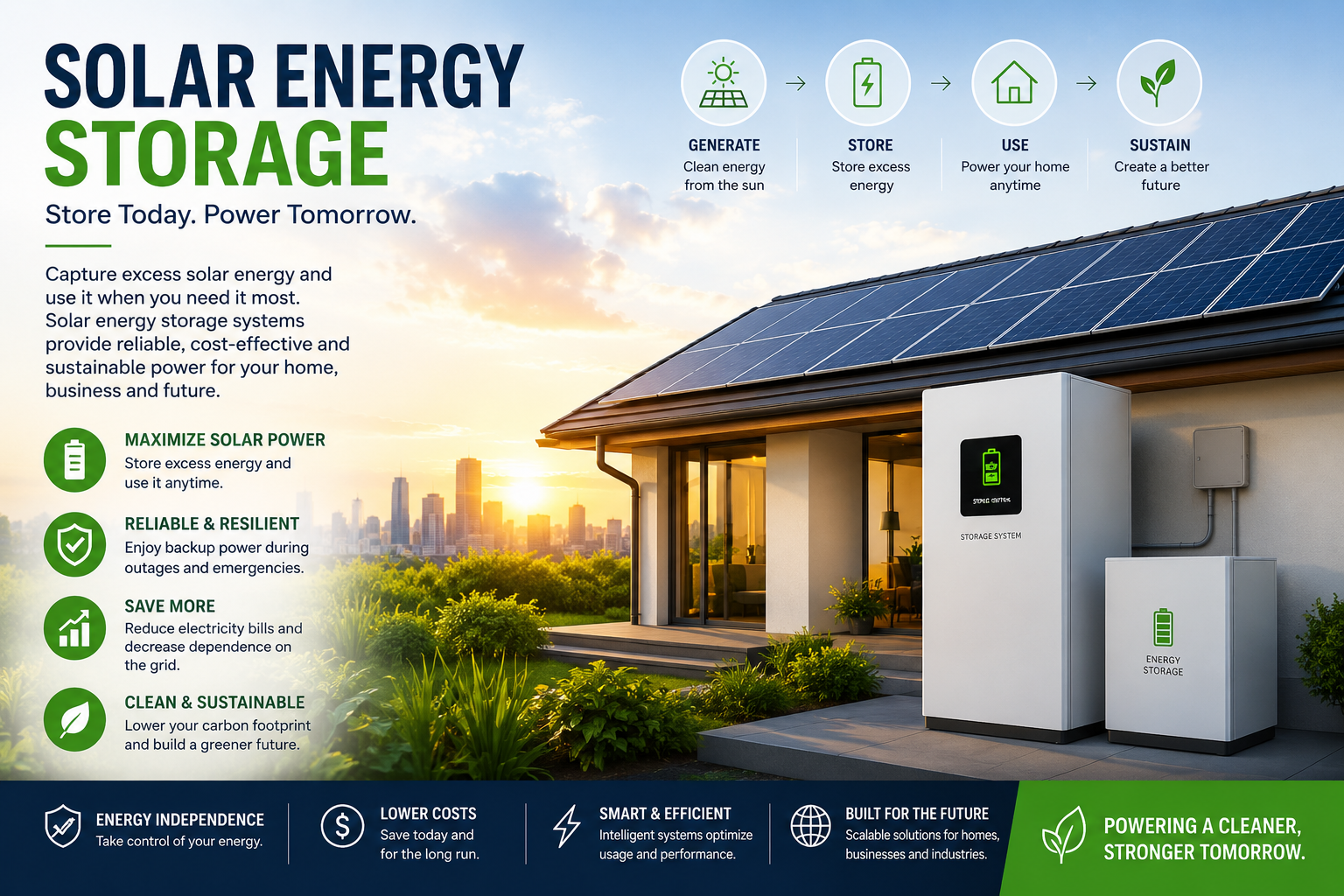
Solar energy storage solutions primarily rely on advanced battery technologies that capture and store electricity generated by photovoltaic (PV) systems. These systems allow users to maximize self-consumption of solar power, reduce dependence on conventional grid electricity, and improve energy resilience. By storing surplus energy instead of sending it back to the grid, consumers can utilize clean power whenever needed, resulting in lower electricity costs and enhanced energy independence.
The growing demand for reliable and uninterrupted power supply is driving the adoption of solar energy storage systems worldwide. Frequent grid disruptions, rising electricity prices, and increasing awareness of sustainability have encouraged residential, commercial, and industrial consumers to invest in integrated solar-plus-storage solutions. These systems provide backup power during outages while helping organizations achieve carbon reduction targets and environmental commitments.
Technological advancements have significantly improved the performance and affordability of energy storage systems. Lithium-ion batteries have become the dominant technology due to their high energy density, long cycle life, fast charging capabilities, and declining costs. Emerging technologies such as solid-state batteries, flow batteries, and advanced battery management systems are further enhancing storage efficiency, safety, and operational lifespan. Integration with smart energy management platforms also enables users to monitor energy consumption, optimize storage utilization, and participate in demand response programs.
Solar energy storage is playing an increasingly important role in supporting modern electricity grids. Utility-scale storage projects help balance supply and demand, stabilize grid frequency, integrate higher shares of renewable energy, and reduce dependence on fossil-fuel-based peaking power plants. Governments and regulatory bodies across various countries are introducing incentives, subsidies, and favorable policies to accelerate the deployment of energy storage infrastructure and strengthen energy security.
The residential sector is witnessing strong growth in solar battery installations as homeowners seek greater control over their energy consumption and electricity expenses. Commercial and industrial facilities are leveraging energy storage systems to reduce peak demand charges, improve operational reliability, and enhance sustainability performance. Meanwhile, utility-scale projects are expanding rapidly to support large renewable energy installations and grid modernization initiatives.
Looking ahead, solar energy storage will remain a cornerstone of the global clean energy transition. As battery technologies continue to evolve and costs decline, energy storage systems will become increasingly accessible across developed and emerging markets. The combination of solar power generation and energy storage offers a practical, cost-effective, and environmentally responsible pathway toward a resilient and sustainable energy future.
Organizations, governments, and consumers investing in solar energy storage today are not only reducing energy costs but also contributing to a cleaner, more reliable, and carbon-neutral world for future generations.
