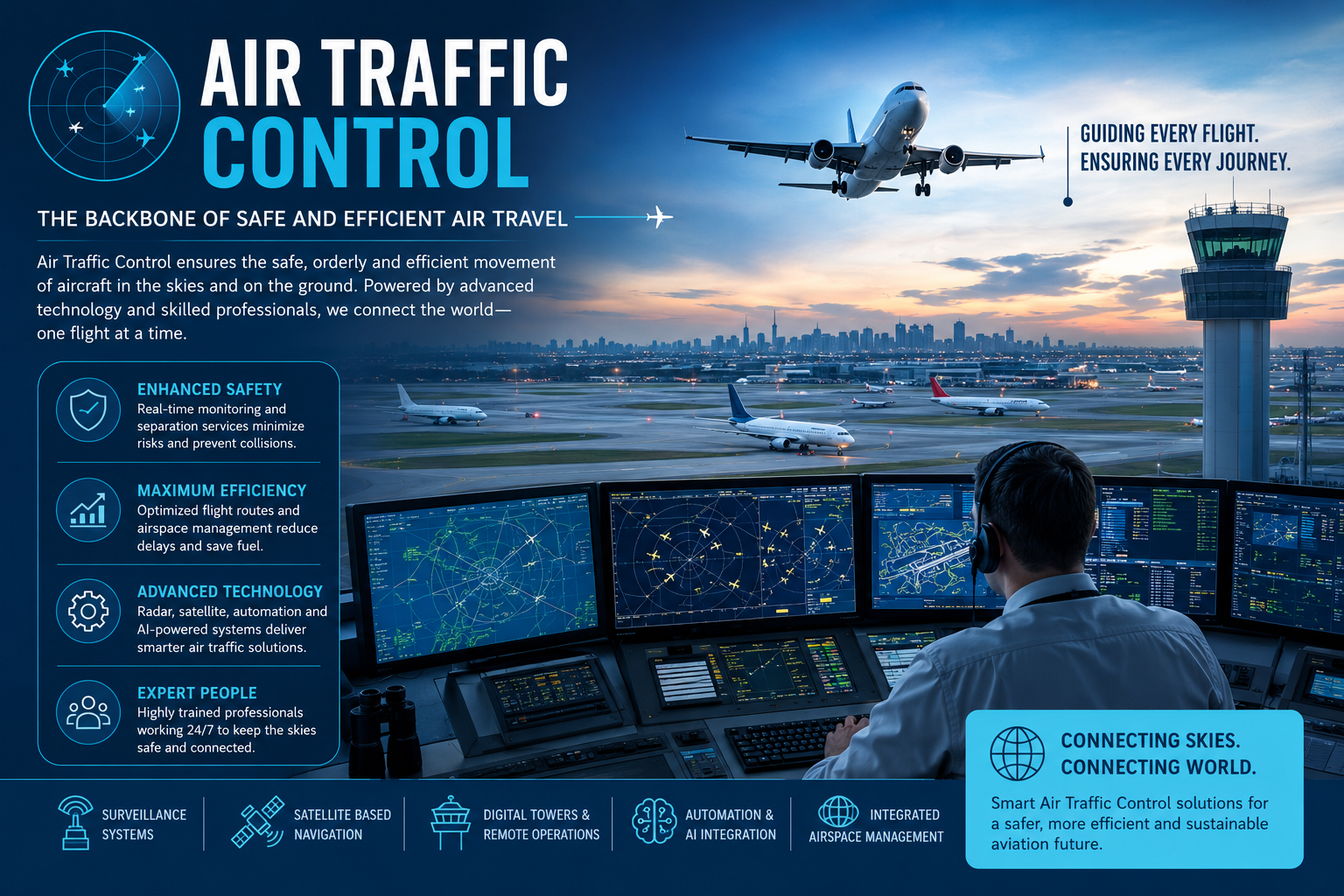
As global air passenger traffic continues to rise, the importance of reliable and advanced Air Traffic Control (ATC) systems has never been greater. Every day, thousands of aircraft take off, land, and navigate through busy airspaces, relying on sophisticated ATC infrastructure to ensure safe, efficient, and seamless operations.
Air Traffic Control serves as the central nervous system of the aviation industry. It coordinates aircraft movements on the ground and in the air, manages flight routes, prevents collisions, and optimizes airspace utilization. Modern ATC systems combine advanced radar technologies, communication networks, surveillance systems, and intelligent software platforms to provide real-time monitoring and decision-making capabilities.
The aviation sector is experiencing rapid transformation driven by increasing passenger volumes, airport expansion projects, and the integration of digital technologies. Next-generation air traffic management solutions are enabling airports and aviation authorities to improve operational efficiency, reduce delays, enhance safety standards, and minimize fuel consumption. Technologies such as automation, artificial intelligence, satellite-based navigation, and predictive analytics are reshaping how air traffic is managed worldwide.
Air Traffic Control systems play a critical role across both commercial and military aviation sectors. Commercial airports depend on ATC solutions to manage growing flight schedules and passenger demand, while military airports require secure and reliable systems for mission-critical operations. As governments continue investing in aviation infrastructure modernization, demand for advanced ATC hardware, software, and services is expected to accelerate.
Leading technology providers are continuously developing innovative solutions that support digital towers, remote operations, integrated surveillance systems, and automated airspace management. These advancements are helping aviation stakeholders improve situational awareness, strengthen safety performance, and enhance the overall passenger travel experience.
With aviation projected to remain one of the fastest-growing transportation sectors globally, Air Traffic Control will continue to be a vital component of the industry’s future. Investments in smart ATC technologies are not only improving operational efficiency but also creating a safer, more connected, and more sustainable aviation ecosystem.
Organizations that embrace advanced Air Traffic Control solutions today will be better positioned to manage future air traffic growth, optimize airport operations, and deliver superior aviation services in an increasingly complex global airspace environment.
In today's digital world, having a reliable laptop is essential for work, education, business, and…
Wooden furniture has remained one of the most preferred choices for homes, offices, hotels, and…
Wearable display technology is changing the way people interact with digital information. From smartwatches and…
As the world accelerates its transition toward renewable energy, solar power has emerged as one…
Hard Surface Flooring Market Gains Momentum Amid Rising Construction and Renovation Activities The global hard…
The rapid growth of artificial intelligence across industries is creating unprecedented demand for advanced computing…