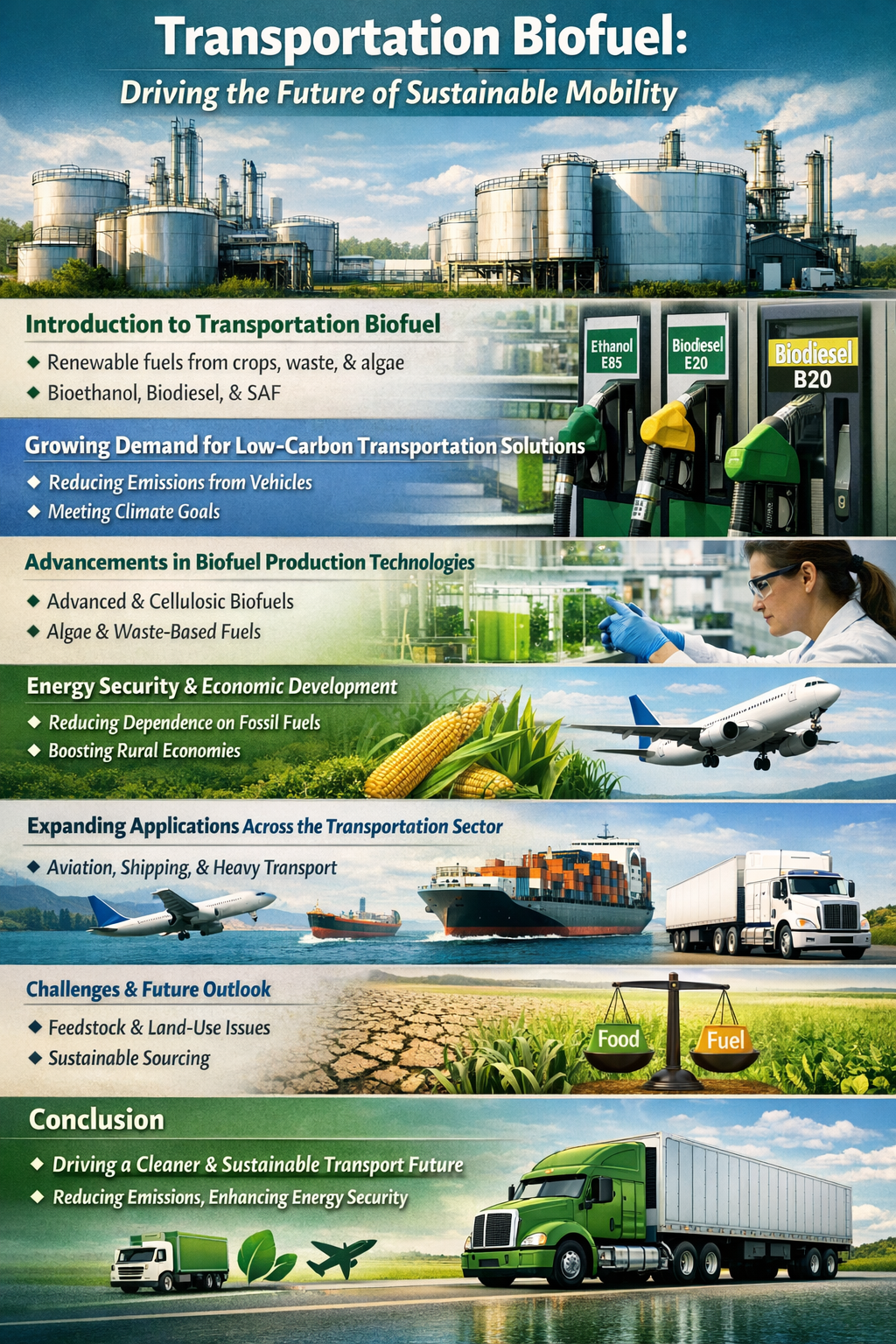
Transportation biofuel refers to renewable fuels produced from biological resources such as crops, agricultural residues, algae, and organic waste. These fuels are designed to replace or supplement conventional fossil fuels used in transportation systems including road vehicles, aviation, marine transport, and rail networks. Common types of transportation biofuels include bioethanol, biodiesel, renewable diesel, and sustainable aviation fuel (SAF). As governments and industries focus on reducing greenhouse gas emissions and improving energy security, transportation biofuel has emerged as a practical and scalable alternative for decarbonizing the global transport sector.
The transportation sector accounts for a significant share of global carbon emissions, making it a key focus area for climate action policies. Transportation biofuels offer an immediate pathway to reduce emissions without requiring major changes to existing vehicle infrastructure. Ethanol blends in gasoline and biodiesel blends in diesel are already widely adopted in many regions, allowing vehicles to operate with lower carbon intensity fuels. As regulatory frameworks tighten and countries commit to net-zero targets, demand for low-carbon fuels in transportation is expected to increase steadily.
Technological progress is playing a critical role in improving the efficiency and sustainability of biofuel production. First-generation biofuels derived from food crops are gradually being complemented by second-generation and advanced biofuels produced from non-food biomass such as agricultural waste, forestry residues, and municipal organic waste. Advanced production methods including enzymatic conversion, gasification, and algae-based fuel synthesis are enabling higher energy yields and lower environmental impact. These innovations are expanding the role of transportation biofuels across multiple mobility segments including aviation, maritime shipping, and heavy-duty trucking.
Transportation biofuels also contribute to national energy security by reducing reliance on imported fossil fuels. Countries with strong agricultural sectors are able to utilize domestic feedstocks such as corn, sugarcane, soybeans, and waste oils to produce renewable fuels locally. This creates new value chains for farmers, promotes rural economic development, and supports job creation in bio-refinery operations and supply chains. For emerging economies in particular, biofuel development can strengthen both energy independence and industrial growth.
The use of biofuels in transportation is expanding beyond passenger vehicles. Airlines are increasingly testing and deploying sustainable aviation fuel to lower emissions from air travel. Maritime companies are exploring biodiesel and advanced biofuel blends to reduce the carbon footprint of shipping fleets. Heavy commercial vehicles and logistics fleets are also adopting renewable diesel and biodiesel solutions as part of corporate sustainability strategies. These developments highlight the versatility of biofuels in addressing emissions across multiple transport modes.
Despite strong growth prospects, the transportation biofuel sector faces several challenges. Feedstock availability, land-use considerations, and production costs remain key concerns for large-scale adoption. In addition, ensuring sustainable sourcing of biomass and balancing food versus fuel demand are critical policy considerations. However, continued investment in advanced biofuel technologies, government incentives, and global sustainability initiatives are expected to support long-term market expansion.
Transportation biofuel is emerging as a vital component of the global transition toward cleaner and more sustainable mobility systems. By utilizing renewable biological resources and integrating advanced production technologies, biofuels provide a viable pathway to reduce transportation emissions while supporting economic growth and energy security. As innovation continues and policy frameworks evolve, transportation biofuels are set to play an increasingly important role in shaping the future of the global transportation energy landscape.
In the current digital economy, cybersecurity and digital trust have become core enablers of business…
The global consumer electronics landscape is undergoing a structural shift, driven by the convergence of…
Strategic Partnership to Enhance Robotics Simulation Global automation company ABB has announced a collaboration with…
Rapid Growth of AI Projects on GitHub GitHub has become one of the most active…
Artificial Intelligence (AI) and advanced analytics are rapidly reshaping the global military and defense landscape.…
The automotive overhead console has evolved from a simple dome-light housing into a multifunctional control…